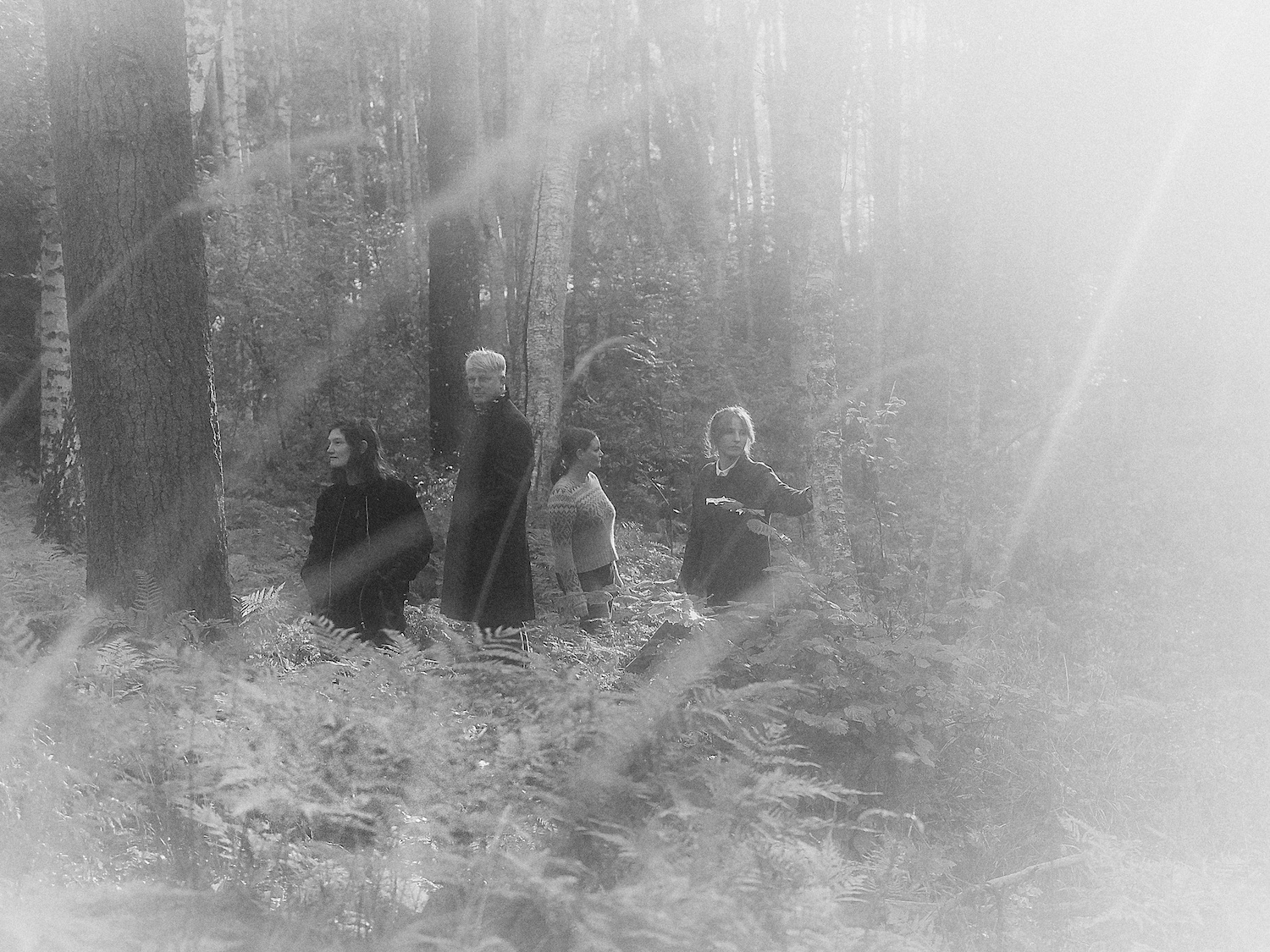
As they delicately straddle the boundary between diametrically opposing forces, this Swedish quartet dances upon the tightrope that tethers the ends of the spectrum as they deliver their debut album. From Stockholm, Elia Mårtensson Almegård, Sara Engström and Maja Zetterberg join us to discuss the origins and expectations of their record Years and Years.
Hello and thank you for taking the time out to speak with us at Musicology.
It’s no secret that Dag och Natt implies day and night and that the nature of your work seeks to explore dichotomies. In that precarious zone that lies between extremes and between irreconcilable differences, how do you attempt to extrapolate and crystallize in the sound, the interplay between spaces?
We’re not sure we really work with extremes in any deliberate way. The idea of day and night might be more present to us than it is to the listener. Sometimes the dualities we seem to explore in the music come from a vague starting point – a feeling or a fragment – that slowly grows into something more coherent over time. We often find ourselves drawn to a kind of balance, though – trying to let light seep into the dark, and maybe allowing the dark to shadow the light a little too.
In what ways has the distinct seasonality and the contrasting quarters played in eliciting the mood and atmosphere you were attempting to extract and lay down on wax?
As a Swede, it might come naturally to be inspired by the changing seasons, simply because they’re so pronounced here. The winters are so long and so dark, and it can feel like you spend your whole life longing for the short, fleeting, bright summer.
That constant contrast between light and dark – and the emotional shifts that come with it – slips into the music. Maybe not in a literal way, but it shapes the atmosphere somehow.
How has the triple pronged approach of shared vocal duties between Sara, Elia, and Maja enhanced the dynamic of the band and aided in creating the extra depth and isn’t always available to outfits who have just one vocalist?
Both the lyrics and the vocals become more of a dialogue when we share them. We can strengthen and expand on ideas by letting the different voices represent different perspectives or emotions within a song. We write our own parts but tune in to each other’s words – trying to create contrast while still staying in the same universe.
Sometimes writing in English, which isn’t our first language, actually makes things easier. It gives us a bit of distance – a way to not get too personal – while still trying to stay honest and true in what we say.
Having just one lead singer often means that person ends up being the face, the voice, the spokesperson. We prefer to share the load. We like to keep things democratic. Also, none of us would remember all the lyrics.
The aptly named album Years and Years is the summation of evolving lives and the unfurling of time and experience. Once collated, how did you view the tracks, their narrative, and where each of you now stands in relation to when they were first written and the sentiments they captured?
The songs, in many ways, mirror who we are as people. We aim to convey both a sense of intimacy and, at times, a subtle dark humor. Although some of the tracks were written years ago, they still hold reflections of how we view life and our personal philosophies. The experiences we’ve lived through have been woven into the music—sometimes ongoing, other times as memories.
How much of the record did you want to be just your own expression that will forever be enshrined by the experiences you all contributed to in the recording of the album, and how much was deliberately left open for interpretation that the listener could make of it what they will?
We want to leave it very open for the listener to make their own interpretations. That we ourselves might have a clear idea of what a song is about or how we crafted it shouldn’t matter to the listener — that’s the best thing about music: people can bring their own experiences to it and maybe find meanings that fit their lives right at that moment.
Can you share some of the specific details and events that went into the lyricism on the album, and how being holed up in a cabin that was buried in the woods facilitated the inception and eventual final cuts?
Isolating ourselves and fully focusing on writing music together is not only the best way for us to make it work, but also absolutely necessary since we all have family and other things demanding our attention. Dedicating time to shut out other distractions is a great way for us to write, and surprisingly, ideas born in those sessions rarely get discarded. Ideas that come from that kind of isolation tend to stick around — maybe because we’re not distracted by anything except each other and occasional coffee breaks.
Given how central the theme of love was to the record and the tender thought that went into shaping the words around the meaning, can you elaborate on some choice lyrics you were most proud of and what they represented to you?
Thank you for the kind words! It’s hard to pick just one lyric we’re especially proud of, but we can definitely say that the theme of love is a gift that keeps on giving.
Hopefully, we touch on themes that resonate emotionally with others.
There is a strong international shoegaze scene with so many iconic names, both past and present, but what localised sounds in the Swedish scene have shaped your signature sound?
Oh, there are so many amazing examples throughout the years… Sweden really does have a lively music scene. People often mention the Swedish melancholy, usually blaming it on the long winters and endless darkness—maybe there’s some truth in that after all. So many great bands and artists have come out of here—The Embassy, Honey Is Cool, Franke, The Radio Dept, Bear Quartet… And honestly, have we even thanked Roxette enough for It Must Have Been Love?
What external influences helped shape the direction of the album? That is to say people, places, or experiences that altered the way you approached your craft?
Definitely the people around us, our relationships. We owe them everything!
What does music give you that nothing else does?
We’re really fortunate to create freely, since we have other ways to support ourselves. We don’t have to listen to anyone else or worry about anything other than how we want to express ourselves and what we want to say. We’re completely free to do things our own way. And the wordless communication between us when we play together — when everything just feels right — is something that’s hard to capture in any other context.