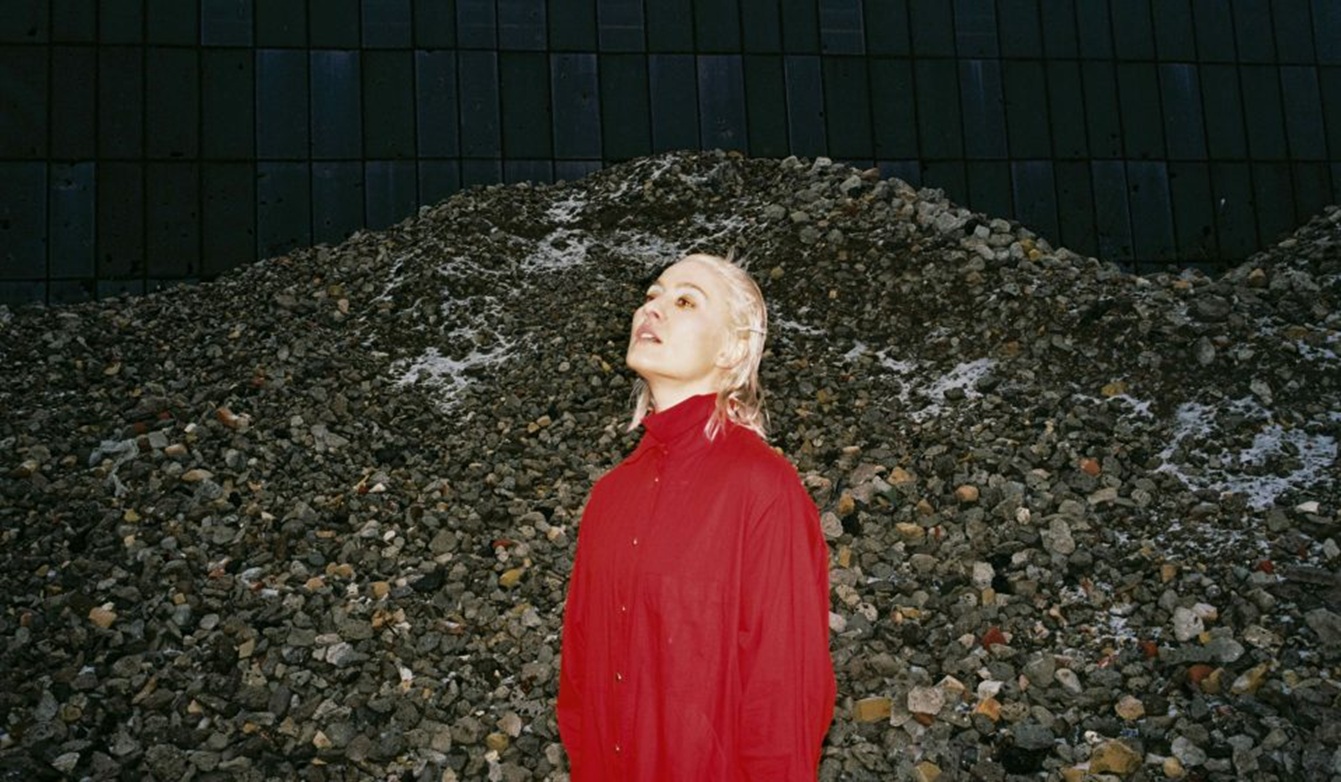
After taking some time out and seeking refuge in a cabin in the mountainous surroundings of Cumbria, England and sinking her teeth into the world of wood working, the Welch musician returns with a deep new record founded on the results of quiet soul searching and a pursuit for new artistic avenues.
Hi Cate, and thanks for taking the time out to speak with us at Musicology.
Firstly, congratulations on the new record Reward. Its inception came from a period in your life involving significant change and spending a long time in the Lakes District. Can you elaborate on what was happening during this time in your life and also how the location you were living in impacted on the style and subject matter that features throughout the album?
I needed to take some time away from music and got to the point where I think I burnt myself out a bit, and wasn’t sure if I still loved it, so I took some time off to figure that out. I spent my days in the workshop and going to furniture school. It meant that music, for the first time in years, wasn’t all-consuming and allowed me to rediscover it, and for me to find out that I still had a lot of love and joy for it.
Focusing more heavily on personal subject matter on this record compared to previous releases, do you feel that this is an album that could only have been created later in your life and musical career due to the maturity and greater world view that comes with age and the desire to explore personal matters in a deep way?
I think the longer you do something, you become more focused on why it is that you are doing it, and what it is that you want to put into it, and what it is you want to get out of it. It comes from age I suppose, and caring less about a fixed idea or an audience’s expectation, which gives you the freedom to make something that is a lot more authentic and honest.
Did that give you the freedom to explore, because I guess it is fair to say that music has been the one underlying constant in your life and the prism through which the world is viewed, analysed, and reimagined?
Yeah, I suppose the whole reason for taking time off was to adjust back a bit, and it kind of worked for me, but I think also to remove yourself from life, almost entirely as you knew it. It was a personal reckoning of sorts, cleaning shop and getting your motives and priorities in check.
In that period of recalibrating and personal, environmental isolation, whereby it was often just you and a piano. As a musician and lyricist, when writing, are there words that pair themselves with a certain instrumentation that would have only come from this type of scenario?
Absolutely. It was a very particular time, and I was writing songs without realising that I was writing songs, which wasn’t something I had done since I was in my teens. There are some things that are very conducive to this, like being on your own, and there were things about writing on a piano that pair with the landscape and my frame of mind at the time, which suited the type of songs I needed to write more so than on a guitar. Lyrically, I think that led to the realisation that you are not writing for a record and made for a much more intimate experience.
What challenges did you face in producing Reward that you hadn’t dealt with compared to your previous albums, and conversely what were some of the positive surprises that occurred during the making of Reward?
To write without the awareness that you are writing, which eventually becomes a record, is an amazing freedom. Compare that to being in a studio and having to work with other people, which creates a real sense of exposure that is quite frightening at times and can create friction at times, which isn’t always a bad thing but this freedom wasn’t something I had really experienced before. Previously, I had a lot of continuity in the studio, which I really enjoyed and excited me, but this took a different turn and demanded more crafting and time, really working things out and employing patience so it was a much more laborious process, which in the end was more rewarding because of it.
From the structure of a studio setting to the looser approach of this album and back to a form of structure, of the ten tracks on the album, how considered was your approach in track order in terms of the overall narrative the record follows?
For me, it is one of the more difficult parts of the process, putting the track listing together, because it shapes and gives the album a definitive character in a way. I know people that will only listen to select songs on an album, so that to me means the shape and the arch of the record is hugely important. It was something I laboured over for a really long time, and you have people telling you not to labour over it because no one listens to albums anymore, and others that tell you it is one of the most important things, which I strongly believe. It is the last decision you make creatively, which I think makes it an even harder process because once you have made that decision, the album gets made, and that’s that, which is the let go, I guess. I knew from the beginning that my album was going to open with Miami and end with Meet the Man and I just went back and forth with myself for a long time to fill the space in-between.
The video clip for Daylight Matters, with its fusion of industrial landscapes and natural environments, is a delicately constructed piece. Was the concept for this one that was strictly storyboarded or a much more organic process that evolved as the shoot unfolded?
More of the latter really. Casey Raymond, who directed the video, is trying to evoke the sense of searching for something or running away from something. Often the two hold.
In the same industrial vein as Daylight Matters, Home To You is another amazing clip as directed by Phil Collins, and focuses on a subject that is close to your heart. Can you elaborate a little on the clip and your Kino Úsmev’s educational initiative?
We are living in a time where the politics of division are absolutely rife, and it is really important to stand in solidarity for those who are routinely discriminated and denied basic education and medical care. It is really important to keep looking and to understand what it is like for people who are marginalised. It doesn’t mean we can’t care about them, and so it was a really important clip for Phil to make
Moving on from others to yourself, having met and performed with so many different musicians and artists over the years, during that time, have there been any defining moments or words of wisdom that were spoken to you which really resonated with you and in turn altered the way you approach your craft?
I think anytime you work on your own music or with something on their music, there is always going to be a takeaway, even if it has been a fulfilling process or an arduous process. There is always something to learn and give something that you can use in the next project.
During the time that led me to take a year off, for Bradford Cox to be one of the first people to work with me after that, he really hammered home certain things that I had been struggling with. He is such a force, and his integrity for art and music is unfailing. So I feel very lucky to have worked with certain people and met from phases in my career.
From that feeling to more of a philosophical extension to that, what does music give you that nothing else does?
A feeling I’ve had ever since my dad played me Pavement records, which is this wanting, desire to make (what I find in ceramics and furniture making now). It is a feeling that you can’t put into words, which I think is a great thing, and why you make music.