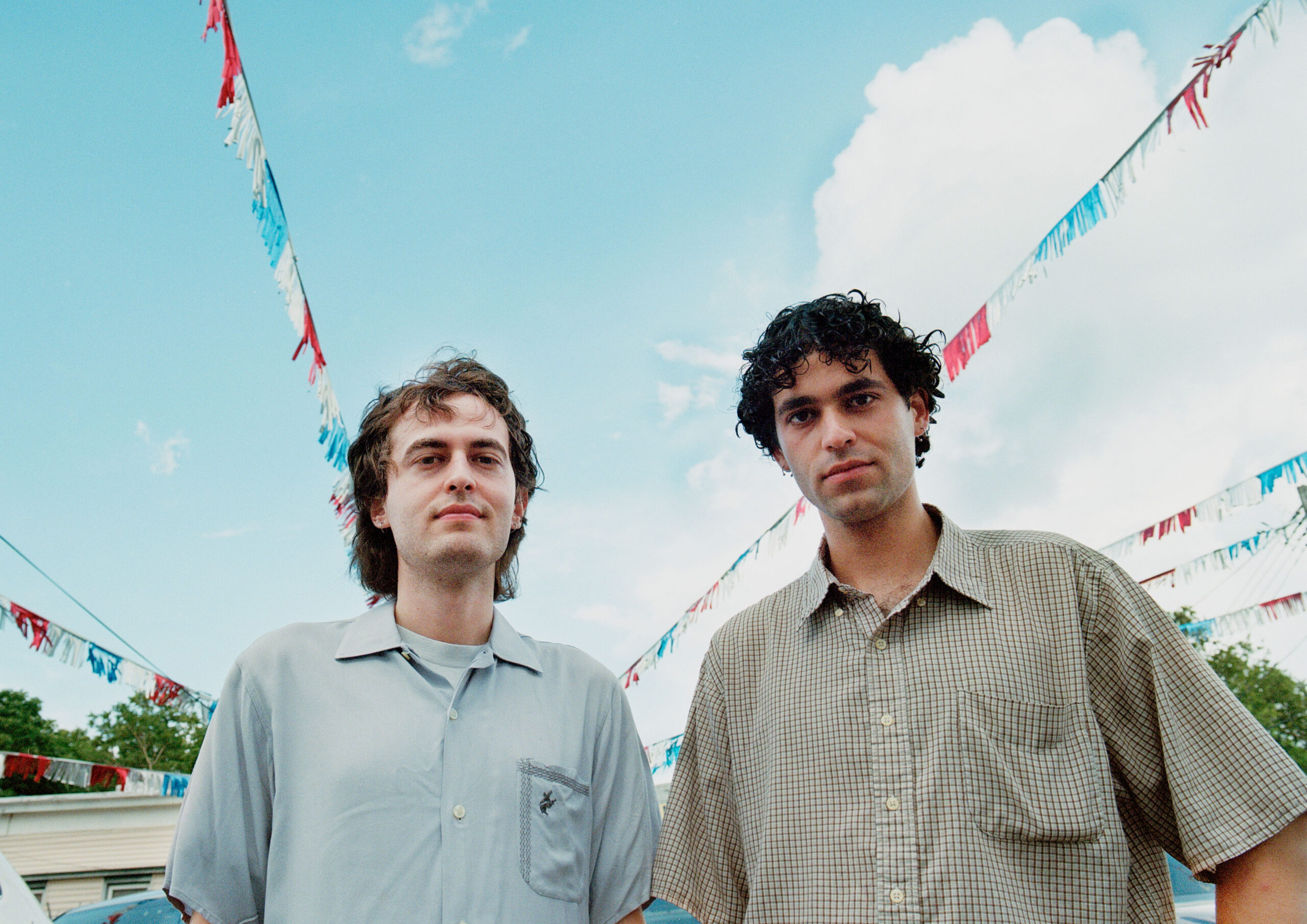
Separated by cities but connected through music, the brotherly duo of Nick and Shane Sullivan make up the outfit Joyer. An outfit who have been sporadically releasing material for a number of years, but now, with their latest, On The Other End of the Line…, their mutually exclusive personal experiences have become a shared commodity as the pair each process their individual grievances through the cathartic filter of music.
Hi Nick and Shane. Thanks for taking the time out to speak with us at Musicology.
Congratulations on your new album. Is there an overarching theme to the record?
Shane – We were thinking a lot about loneliness and the search for connection in every part of life. It sounds a little corny, but we both went through some life transitions around the time of writing this album, so that definitely contributed to the content of a lot of the songs.
There is a technical intricacy to the way in which your sound is built. What is your general approach to musical construction and the methodology you employ to lay down your works?
Shane – I would say it differs from song to song. Since Nick and I are living in different cities, we do a lot of rough demoing on our own to sort of sketch out the song to show each other. If we both think it’s good enough to expand on, we’ll get re-demoing and adding more layers to it. That’s one way songs come together. Sometimes one of us will hear something while we’re tracking a song for real in the studio and play around with adding layers then at the last moment.
The dynamic you share is obvious, not simply because you are brothers but for the innate way in which you work with one another. Can you explain some of the signals, non-verbal, personal ways in which you both relate and share your music?
Shane – I feel like I’m often not the best collaborator because songwriting feels like a very personal and vulnerable thing to do, but Nick is definitely one of the only people I feel truly comfortable collaborating with. We’ve been working together for so long now, and we really understand each other, so it’s never scary or uncomfortable to share ideas. That kind of comfort really lets me let loose and try out more ambitious ideas that I might be too scared to try with most other people I might be collaborating with.
Can you detail some of the times and events that shaped the lyrical content on the album and how, as a writing team, you coalesce separate experiences into a single output?
Nick – Although all of our songs are collaborative, we don’t really write lyrics together. A lot of our lives between the release of our last album and the writing of this one was made up of touring and other Joyer related things, so a lot of the lyrics ended up being about that stuff. Since we spent so much time together and experienced a lot of the same things, it sort of naturally happened that a throughline came about across the album. Obviously, we’re not the same person and aren’t together all the time, so I think even though we wrote about a lot of the same things, we come at them from different perspectives.
As life rolls on and the endless procession of change marches forward, you both found yourselves moving around, Nick from Brooklyn to Philadelphia, and Shane from Boston to Brooklyn. In what ways did this impact the record?
Shane – Even though we just missed each other in Brooklyn and still are in different cities, our moves have made things a lot easier. We’re only like a 90-minute drive away from each other, so it makes meeting up to flesh out song ideas or even practising way easier than it used to be.
The change of starting up a new life in a new city definitely seeped its way into the songs and the main theme of the album, but I think now that we’re settled, it’ll make the future of the band a lot easier and help us churn out more songs. I’m really excited about that.
With only around 12 months since your last album, Night Songs, how is that album tethered to On the Other End of the Line…and where does it depart into uncharted territory?
Nick – Before Night Songs, we had a pretty big gap of not releasing music. When that album finally came out, we sort of felt like an entirely different band from when we started, even to the point where I almost think of it as our first real album.
A lot of the thought process on the writing on On the Other End of the Line… was leaning into what we genuinely like to listen to and enjoy playing, so I would say it’s tethered to Night Songs in that we took our favourite aspects of it and dove deeper while stripping away the parts we felt like we’ve explored enough. A lot of it felt like uncharted territory though. We booked studio time before even finishing writing, tried out a new engineer/producer for the first time, and tried to embrace our poppier side than ever before.
On a technical level, what kit do you use to achieve your signature sound?
Shane – We’re not really crazy gear heads or anything. We just make use of what we have. I’m a fan of Fender guitars and amps, I use a Deluxe Reverb and a Jazzmaster. We don’t rock with too many pedals, just mainly an overdrive, fuzz, and chorus pedal and a few other modulation pedals here or there for certain overdubs. I feel like layering guitar parts and tracks really help us achieve the sound we’re looking for usually.
Bringing producer Henry Stoehr into the fold, what did Henry bring to the table on this album?
Nick – We felt like working with Henry gave us a lot of freedom to experiment. He suggested we book eight days in the studio, which was a lot for us but gave us time to try different ideas and see what worked. It also helped that we felt like we gelled well personally, because it made it feel much easier to collaborate, he sort of just felt like another band member working with us. We have a lot of overlapping music tastes, so it constantly felt like we were on the same page about the directions of the songs and what we were working towards.
It can often be said that the studio itself can be considered an instrument, and given your layered approach of acoustic guitar textures, blending of tones, and the re-tracking parts, how do you translate this live, and is it near album perfection that you are chasing when performing on stage, or more so an ideal of approximation?
Nick – We’re not really too concerned with replicating the album perfectly live. We really like having a layered sound on our albums and try to track a lot of stuff and play around with it in the mix. At that point, we’re not even really thinking about how a particular song will work live. We both find it cool when bands have a live version of a song that sounds different from the actual track. Neil Young comes to mind, where there are certain songs of his where we prefer the live version.
When it’s time to figure out our songs live, we definitely start out trying to replicate as closely as we can, but we leave it open to try new stuff if it feels like it suits it in a live setting, or even if we come up with a cool idea we hadn’t thought of before.
Having performed countless shows, can you share with us a particularly memorable one and why it was so special?
Nick – The first Julia’s War Fest feels like a really special one. The label was pretty new at that time, and a lot of those bands were starting to gain traction. You could feel there was a lot of excitement and enthusiasm for the music that weekend. We got to play with a lot of our friends, and it was my first time seeing a lot of bands I had been a fan of for a while. I just remember it being really fun and enjoying every set, and it was the first festival type of show we ever played.
What does music give you that nothing else does?
Nick – Besides just being someone who loves music and just being around it, I find that I really value having a project to work on. There have been times when I haven’t been in bands or periods in the past when Joyer wasn’t super active, where I feel kind of aimless. There are other artforms that I can get excited about and inspired by, but it doesn’t happen as much as it does with music. I feel like I need to be writing or practicing or even doing the less exciting organization and planning that comes with a band to keep me centered.