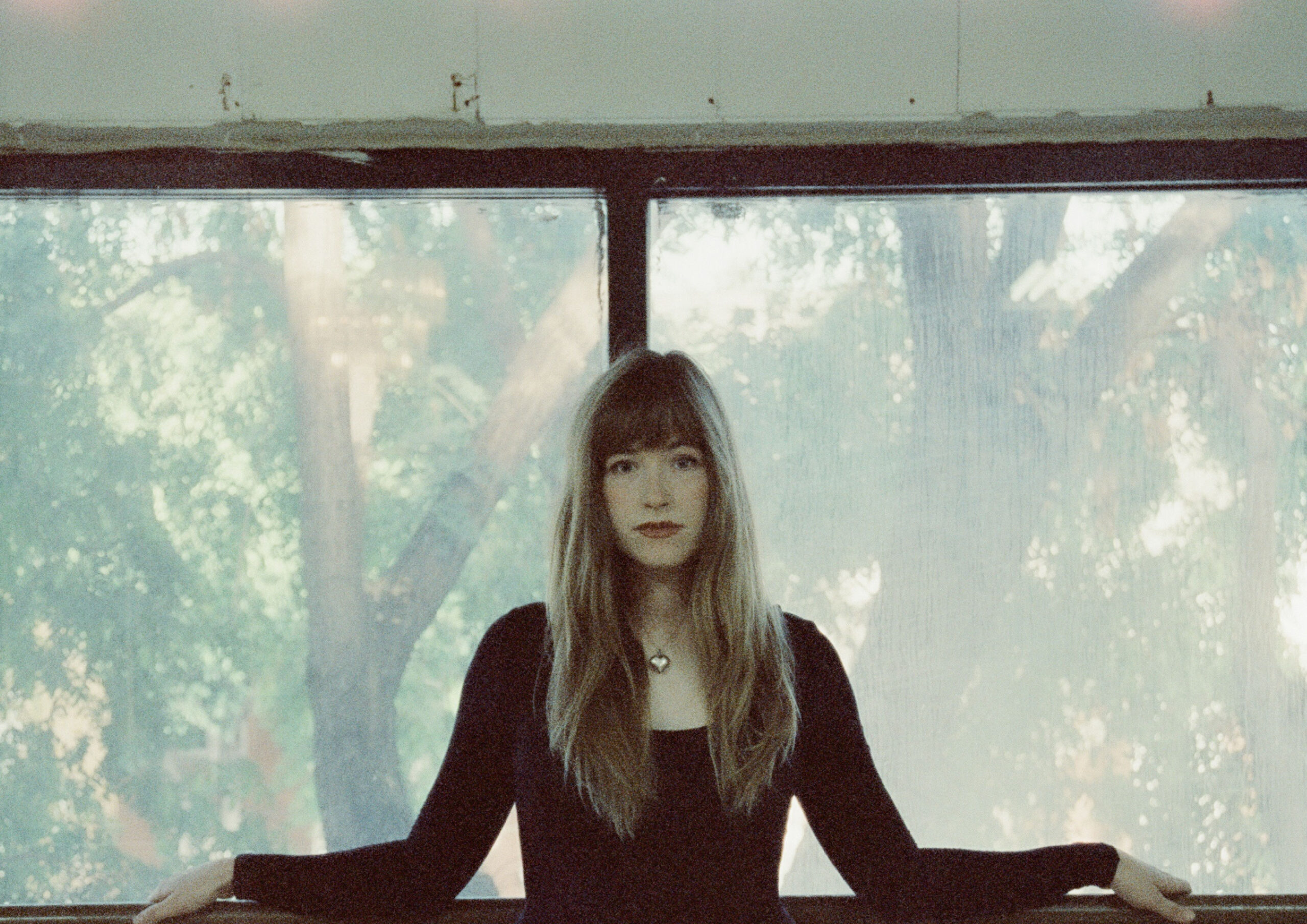
Virginia-born, LA-based multidisciplinary artist Kate Bollinger is set to perform across Australia this summer, and as she prepares for her trip Down Under, we manage to steal a little of her time to talk shop.
Performing on the back of her acclaimed full-length debut Songs From A Thousand Frames of Mind, the Deluxe Edition is the icing on the cake. With extra tracks and re-workings of the originals, her intimate live shows blur the lines between indie pop, folk, and psychedelic rock. Honing her skills further and having toured internationally alongside Faye Webster, Tennis, and Devendra Banhart, Bollinger brings a certainty and sanctity to the stage and all that she does.
Delving into her world, it is with particular interest that we explore a certain part of Bollinger’s life because it is at the heart of Musicology and the ethos behind our pursuits. If there is one thing we are acutely aware of, it is the effects of music on minds, especially developing minds.
So, it was only natural that our interest was piqued when we discovered Bollinger’s mother was a music therapist. An immediate curiosity as to how her parents’ vocation coloured her world and what kind of influential attributes her mother’s profession left on her was a question that was at the front of our mind and on the tip of our tongue, which could not be left unanswered.
And as with many a difficult question, sometimes it is best answered in the words of another, as Bollinger explains when attempting to explain how her mother imbued her musical theory upon her and the influence it had. Quoting Joan Didion, Bollinger says, “Didion has this essay where she says, “I write to find out what I am thinking”. That’s something I learned from my mom. She writes songs with many of the people she works with, some of them are unable to easily express themselves otherwise, but a song can draw things out of you with a mysterious force.”
And the methodology toward extracting sound and sentiment from those who may struggle to express it is a point reinforced by her mother’s personality, as Bollinger goes on to say,” She’s also a very fun and light-hearted person. She has a box of bells and percussion instruments in the trunk of her car that she uses with her groups and individuals, so when you ride around with her, there are constant little clanging and jingling sounds. She definitely instilled in me a sense of fun and silliness and love of absurdity, and that’s kind of where my music is headed now too. I want to make fun music.”
A comment that is not to be taken lightly. As one’s driving force, no matter what the rationale, it is the motor that propels one forever forward, so if it is fun music that Bollinger is inclined to make as a way of processing the world, then fun becomes the lens through which she filters the world around her. So important to Bollinger is the idea of fun and spontaneity; that one of the fondest musical memories she has is of a time when performing a Randy Newman track, and how it lit up her night. Recalling the evening, Bollinger shares her recollection, “One of my favorite shows was in St. Louis, Missouri. My band and I started taking requests of older songs of mine partway through the tour, but that night, somebody called out a Randy Newman song, so my drummer and keys player did this amazing version of it. It’s nice to be as surprised as the audience!! I just sat down on the stage and watched them.” A joy and delight which amply demonstrates the enjoyment that music can bring and how covers, re-workings and reimaginings can be equally as rewarding as the original.
A notion that echoes exactly what Bollinger was attempting to achieve through her Deluxe Edition. Giving some of her original recordings a considerable working over. In doing so, the processes Bollinger employs and her logic behind those moves become more apparent as she details. “I’ve been making a lot of tiny songs on Garageband and ‘You’re A Dancer’ is one of them… I guess maybe it seems a little random to include, but it’s one of a bunch of songs I’ve been making lately. I also initially wanted the album to have some really sparse guitar and vocal songs on it, but we didn’t get around to those, so I thought ‘You’re A Dancer’ could occupy that space. Similarly, the deluxe version of ‘In A Smile’ is a phone recording of the song on the day I wrote it with my friend Matt. The version that wound up on the record is a cool interpretation with the band, but I wanted the bare bones recording on there too. ‘Lonely’ was always meant to have strings, and I was home for a few days this past summer, so we recorded a new version at Spacebomb in Richmond, VA. Matthew White is playing keys, and Trey Pollard arranged and conducted the strings. And lastly, I’ve been home recording a lot recently with my friend Jackson MacIntosh. It’s been a whole saga of broken tape machines, getting them fixed, borrowing different ones from friends, and trying to find the one that sounds the best. We’re basically taking my Garageband recordings and trying to make them sound a little better, while maintaining the essence of the original recordings.”
A feeling that, as any artist can attest, the concept of a song or its structure, when there exists a feeling of it being left unfinished, still holds the promise of refinement. Alternate versions and B-Side releases can always elevate that desire by sharing with others the parallel thoughts and different endings that were considered for their recordings, like a personal choose-your-own-adventure. All the more reason to release an album within a short period of time from its parent recording to show the many different ways a song could have ended up spending its life, and the oscillating thoughts an artist has about their works.
Even the way an album begins can be contingent on such factors. Location, timing, and having the right people around, all add to this dynamic and the period of flux when recording. This was particularly true for Bollinger and how her original album came to be. Detailing those earlier days and how Songs From A Thousand Frames Of Mind was a long time in the making. Recalling how her previous EPs and road-tested material coalesced into that debut record and the influences that shaped it, Bollinger says, “When I moved to Los Angeles in 2022 I didn’t have the same friends and collaborators around anymore, so I spent a long time trying to work with producers but feeling like the essence of the songs would get lost in the shiny studio sound. I was feeling pretty uninspired and hardly writing music during that time. In the end, I decided to work with Sam Evian, with whom I’d recorded my song ‘Running’ with back in 2022, before I moved. By then, I was in a period of writing a lot again, and I’d say probably half of those songs I wrote in the month before we recorded. Most of the others were really old and written in Virginia, either alone or with my friend Matt. But yeah, in those years leading up to the album, I was just very slowly trying to figure out what I was doing and what I wanted.”
Discovering that can be easier said than done, as Bollinger freely admits when acknowledging her eclectic taste and use of different musical styles. Weaving in the various genres she taps into when shaping her signature sound is often more of a haphazard affair than a hard and fast rule. “I don’t have much of a conscious approach with that, but I’m pretty impressionable, so if I listen to a lot of one thing, it starts to bleed over into my songwriting. Somebody once told my ex-boyfriend and me that he is like a vine slowly growing one enormous and beautiful flower, and I’m like a vine constantly growing little flowers all over the place, that bloom, die, and resprout. And I think it’s true, I feel like a little kid in that way… I find out about something, become obsessed with it, and then everything I make for a week or a month is like a direct reaction to that thing.” An honest assessment of her approach, but it isn’t just music that Bollinger applies that philosophy to.
As a multi-disciplinary artist, Bollinger works in various media and embraces a highly focused and time-limited approach to her various crafts in order to extract the best out of herself. Where each medium overlaps to the point of divergence, Bollinger states, “Film and music are pretty linked in my mind. When I record a song, some kind of visuals usually start to emerge.” Going on to discuss how one facet can at times be stronger than the other, she says, “I love film, but I don’t have much of an interest in (or talent for) writing dialogue, so it works out pretty well making music videos.”
And it is this wide-ranging, multi-disciplinary approach and attentive outpouring that makes her musical work a clear collection of marked events in her life rather than specific and single instances, as she declares when dispelling any ambiguity around the two scenarios, “Definitely”. But it is perhaps her ethos toward music as a whole that is most befitting to her attitude and style when it comes to the fundamental and fun reasons for having music in her life and its enduring ability to help those who seek it and practise it: “ Music has the ability to turn sadness into sweetness.” What softer and more sincere statement could there be when harnessing the power of music, its transformative qualities and cathartic strength.