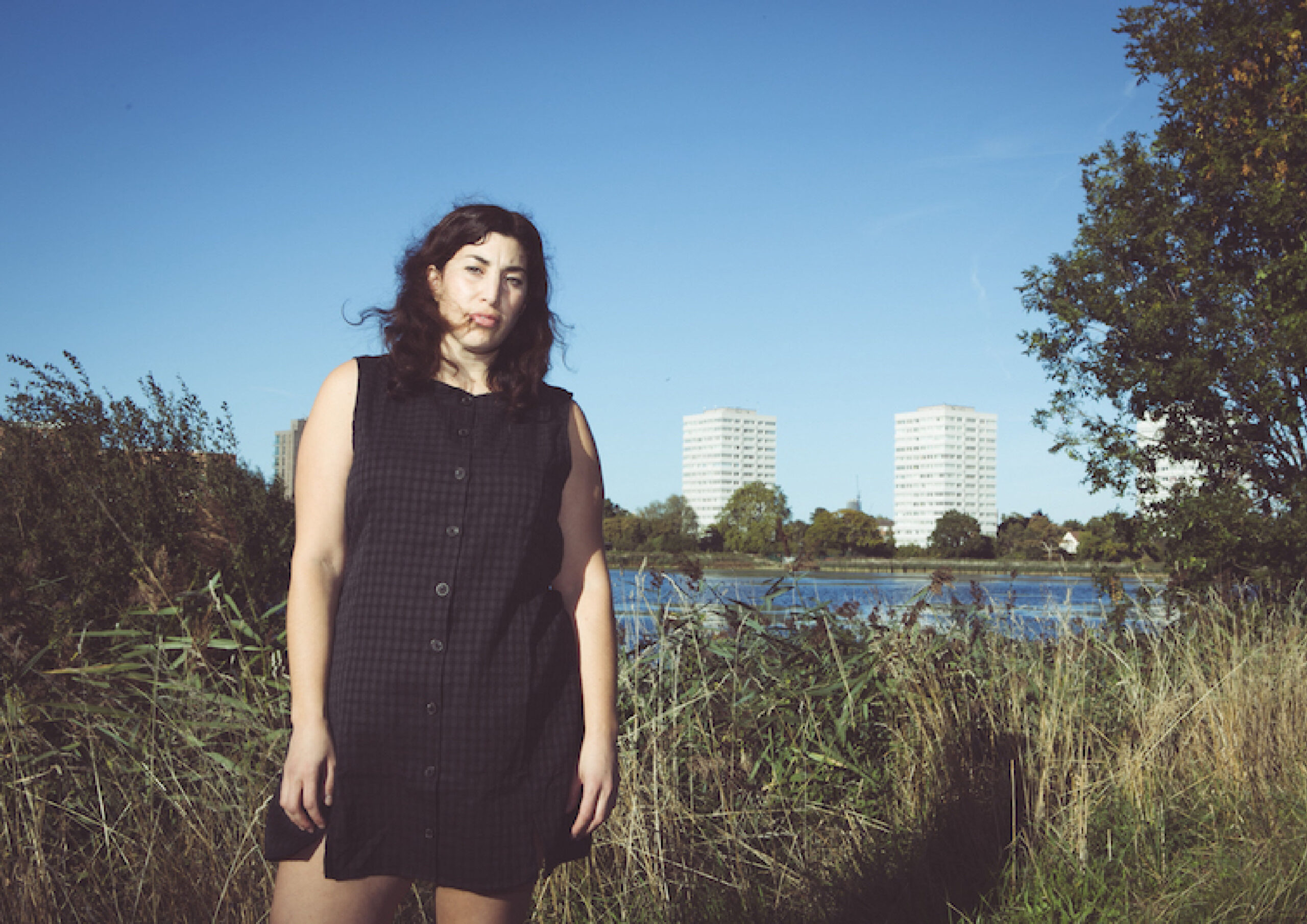
London artist Katy Beth Young is the iron fist sheathed by the velvet glove. Her achingly beautiful album is a disarmingly honest exposure of her inner world set on a collision course with the brutality of life and its winding paths. A project arising from a whirlwind of emotional challenges, True, is the result of the effects of the pandemic, disrupted touring, the breakdown of a relationship, and the loss of a parent. The tumultuous period translated into song and exorcized through lyricism.
Hi Katy and thank you for taking the time out to speak with us at Musicology.
Sometimes an album, especially a debut, is a lifetime of experiences distilled into a collection of songs. Other times, it is a disparate assortment of moments and ponderances. Where along that spectrum would you say your album falls?
‘True’ is somewhere in between. It’s probably the most concise collection of songs I’ve ever released, because it’s the first time I’ve ever been completely responsible for the songwriting – all the other albums I’ve been a part of had multiple songwriters. These 10 songs were written over quite a few years, but there are threads that run through them all, in terms of ideas and also musical sounds- that was intentional because I really love it when an album inhabits a world.
There is so much genuine experience, emotion and energy with your lyricism that it is irrefutable that you have lived and breathed the experiences that have now been laid down on wax. Both cathartic and curious, how did you summon the bravery to be so explicit in your songwriting and avoid the temptation of an alter ego or masking the real you?
This is the only way I know how to do it. I’ve always used songwriting to better understand myself and my experiences, so there’s an honesty that’s necessary in order for me to write – often the song is the first time I’ve been able to look at something that truthfully. But the songs are also a fiction in a way, because you can never tell the whole story and because the words often pull from different relationships and repeating emotions over time.
You exonerate love in ways that show a prior and post experience of it like no other. Your own personal trials and tribulations are utterly your own, yet you manage to commune with a universal touchstone that so many live through but are unable to communicate. And with that, there seems to be no finer examples than ‘True’, ‘Touchscreen’, and ‘Heatwave Love Song’. Can you discuss each of those with us in a little more detail?
That’s very kind- a lot of my favourite songs talk to me in that way via very tangible or specific details so that’s a big influence on my songwriting.
As for those three- ‘True’ is one of my favourite songs I’ve ever written. It’s about trying to be constantly loving and generous in a relationship that is faltering, and ultimately realising that it isn’t sustainable.
‘Touchscreen’ is about the temptation to stay in the fantasy of love- keeping it always safe and romantic in the distance. Its one of a few songs on the album that are thinking about my relationship to technology and how the screens shape romance- heightening it and getting in the way all at once.
‘Heat Wave Love Song’ is a break-up song set on the hottest day of the year. We tried to make a big hot intense mood with the lyrical details and the guitars and driving drums, trying to build that surrounding and obsessive feeling of crushes and of English heatwaves.
The honest filming of your video clips with you singing in front of a projection screen is as naked as it is clever due to its sheer frankness. Was it by choice or by budget to be so wonderfully open and simple when detailing some of your deepest of emotions to a worldwide audience?
It was partly budget for sure haha. I also really love photography and visuals, but I find filming myself quite uncomfortable and exposing. Ideally, I’d be behind the camera, but the algorithm is forever hungry for faces! So I wanted to find a way of making video content that felt joyful and creative to do, and that I could be in without feeling super exposed. I made those videos with my friend Siobhan and a borrowed projector in my living room, and I think that enabled me to be open and emotional.
There are a number of ways that you could have musically expressed the sentiments you explored on the album; however, the gravitation toward alt-country, pedal steel guitar and subdued instrumentation could not make for a better fit. Was this always the intention, or were there other sonic side quests that showed promise but failed to deliver the emotive one-two?
Yes, some of the songs went on some side quests, but that’s part of the writing for me – I think you have to try and let each song be the most itself it can be, and then you can stand back and look at what you’ve got. When we did that, the louder ones were louder, and the quieter ones were quieter, but the alt-country heart was everywhere. That meant that we could pull all of the songs towards it,
Harry’s pedal steel really helped with that. It’s on most of the songs, sometimes very clearly, but sometimes in a way that you can’t hear but you can feel.
Your own vocals are, despite everything, the fundamental bedrock of the album, and in using those vox to cover each emotional experience, just how did you harness your signature sound to do justice to the multitude of sentiments you canvas throughout the album?
I suppose the sentiments and the singing and the song are all created together – with Tenderness I’m writing completely for my own voice and for what I need to say – which makes it easy to find the emotions.
Stuck in the north London apartment during the pandemic, you glimpsed brief stricken moments of isolation and humanitarian connectedness in equal portions. Whereby the gut-wrenching feelings of loss, and specifically, parental loss, provide a short window into one’s deepest parts of the soul and that too of the vastness of humanity. Channeling that through song is no small feat, but you attempted it with the passing of your father, and by doing so, it is as idiosyncratic as it is universal. How did music help you on that cathartic path of processing and seeking closure?
With that song – ‘Playing ‘Country Roads’ – specifically, I actually don’t think it was about catharsis or closure because I don’t think those are the aims of grief. Grief needs to be processed, and I’m sure songwriting helped with that, but it also needs to be cherished even though it’s painful (for me anyway.) The song is a little archive of that time, it’s a sad and beautiful memory that I get to visit and be present with
Something we ask all those who join us at Musicology is, what does music give you that nothing else does?
Music does so much for me. Making music is how I’ve met most of my best friends, and listening to music has helped me understand myself and how to be a person in the world. Singing especially helps me be present, it’s when I feel the most alive and the most myself.