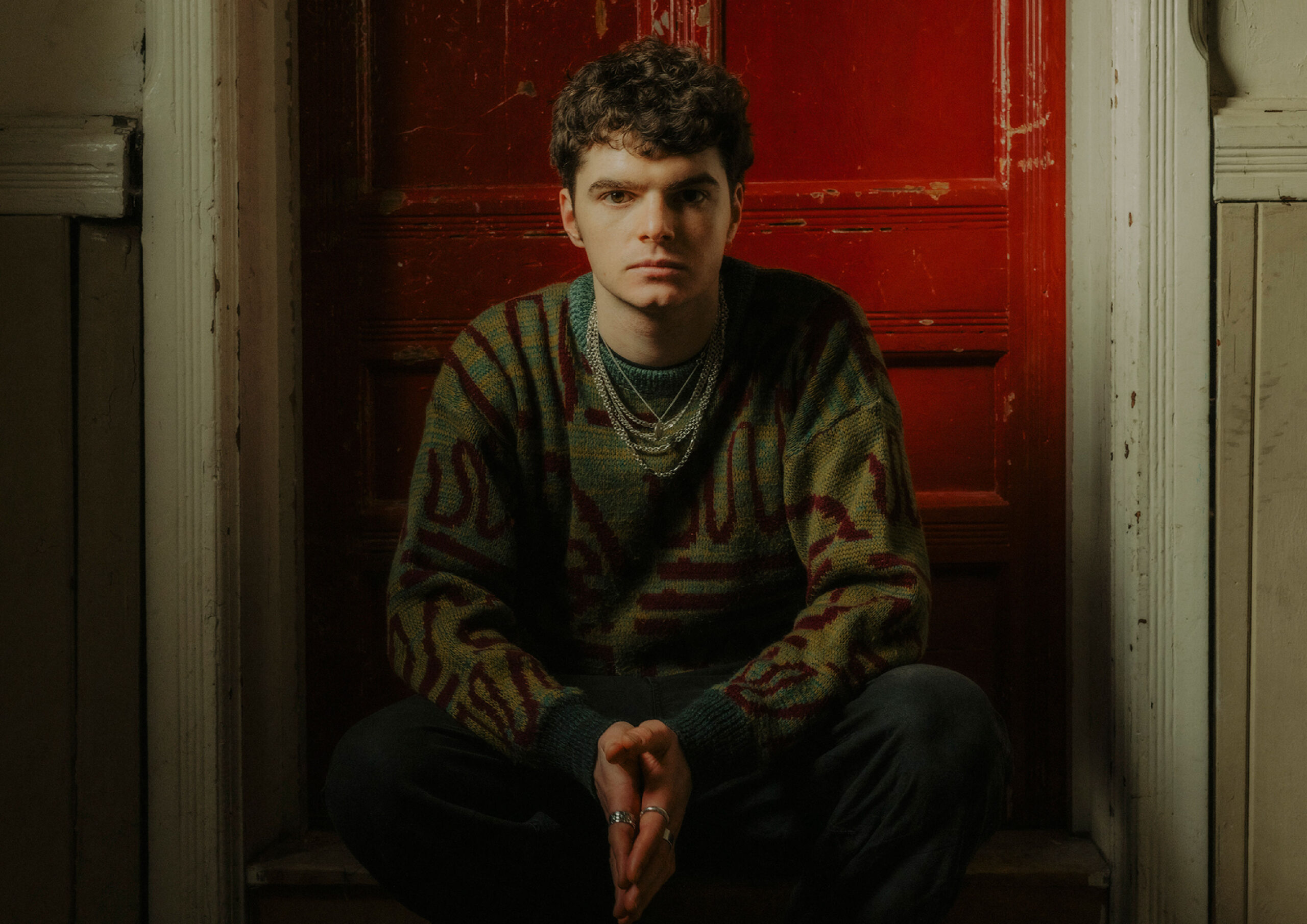
a man whose talents soar above the mediocre, his meagre years belie the extraordinary life already lived. seven years of performing and playing with working men’s club have given way to lunga, his solo debut.
Hi Sydney, and thanks for taking the time out to speak with us at Musicology.
Firstly, congratulations on the new record. Truly a remarkable piece, but not one that was quickly birthed, as a number of the tracks on the album had a long gestation period. Was there any concern towards the flow and structure of the LP, given that some of the tunes come from very different parts of your life?
Thanks for the kind words.
I think the short answer is no. There was some back and forth between me and Alex (the other producer) about sequencing, but I was never concerned about the record not flowing.
I think the album grows and falls apart naturally and synthetically, which acts as a metaphor for the peaks and troughs in my own life. The objective of the album was about reflecting sincerely and honestly, owning up to my own failures and imperfections, but holding out hope for the future. Despite some songs being older than others, I think it was vital to embrace the person I had been and the feelings I had once felt in order to better understand myself through the record.
How was it that you wanted the record to play out in terms of it being an autobiographical diary versus a more obtuse and semi-fictional approach to the subject matter you were exploring?
It was always going to be autobiographical because it started from that point of view. I needed to face myself in order to better understand who I was, where I had come from, and where I was trying to get to.
Knowing that some tracks were written some time ago, in hindsight, how do you view the times in your life that provided the impetus for that material and the intensity of those times from then to now?
Adolescence was a confusing time for me, as I’m sure it was and is for a lot of people. There seemed to be so much changing within my world that affected me mentally and physically; it all blurred into one big mess. My coping mechanisms were unhealthy and came as a consequence of my own ignorance and naivety. A lot of the time, the only way I could face myself or others truly (I thought) was through music or other typical cliched vices. I’d let things come to a head before expressing how I actually felt. I was nervous about upsetting other people and too insecure to be my whole self.
Through this album, I learnt to accept myself and others through listening, reflecting, and trying to move forward without allowing the cynicism or resentment to overpower hope.
I’ve come to realise there is beauty in our imperfections. That is what makes us human. Without making mistakes, I don’t think we can learn.
One of the defining qualities of the album is the delicate and diverse musicality throughout. Can you elaborate on how you conceived and executed the instrumental accompaniment that seemed to best match the lyrical and sentimental topics you were attempting to canvas?
Through feeling.
As a multi-instrumentalist, your talents don’t just end with the traditional modes of music but extend into electronica and production. Does having such an extensive width and breadth of composition allow you to approach your creative pursuit with a level of depth that isn’t necessarily available to those who exclusively play just one instrument – as proficient as they may be – such a broad knowledge affords you a birds-eye view of the overall construction and what each track needs?
Being somewhat competent in as much of the musical process as possible became vital for me. It makes it easier to articulate a vision rather than hypothesising one.
Making albums for me is about compiling lots of different ingredients and turning them into something bigger and hopefully new (like a cake). I like working with other producers and engineers, they understand that philosophy.
In order for an album to be visceral and engaging it needs to be diverse however, nothing should be there just for the sake of it; it should be there because it makes the song/album better, it should have reason, and that reason should contribute to the overall message you are trying to convey. This isn’t always deliberate though; a lot of the time it’s incidental and takes years to realise. I think artists do this without knowing; it’s just a product of survival through expression.
There are some exquisite tracks on the album, such as Lisboa and Hazel Eyes, but also some clever little bridges, such as the cross between Hazel Eyes into Lunga (Interlude) and the wordless tale it tells. There is an emotive dichotomy between dark, discomfort, joy, release. Can you discuss the technical side of this and to what end it serves?
I guess the interlude evokes feelings, good and bad coming to a head and blurring to become one… A shift in perspective on something that already exists or an event that has already happened.
You can’t change the past, but you can change the way you view it. This was me looking at myself from the other side of the mirror. Technically, it came together in a piece of software called Studio One. I only used it on this tune. Using something unfamiliar is a good way of pushing yourself out of a comfort zone I think. Maybe Studio One was the technical shift in perspective I needed to articulate my change in POV. Seeing the same thing from a different angle. Re-contextualising through sampling etc.
Known extensively for your involvement with Working Men’s Club, how did your time with the band and the past seven years of touring inform your style and methodology when tackling your debut solo?
I actually think this record has and will inform Working Men’s Club more than WMC has informed it.
Having performed at Glastonbury and supported seminal acts such as LCD Soundsystem, during these times, were there any words of wisdom spoken to you that really resonated, which in turn altered the way you approach your craft?
Not taking yourself too seriously, I think, is a big one. I don’t think any one person said that to me, but it’s always been a recurring theme in multiple conversations I’ve had with various people I really respect sonically. Enjoying making art is fundamental. Leon Vynehall said to me something along the lines of “as soon as it feels like a job, then you know it’s probably getting out of hand”. That stuck, probably because it was recent, but I agree. I make music because I have to. It is my job, but most of the time it doesn’t feel like one, and I feel incredibly grateful for that.
Something we ask everyone who joins us at Musicology. What does music give you that nothing else does?
A purpose and an ability to create something tangible with multiple different meanings. I can freeze time with music.