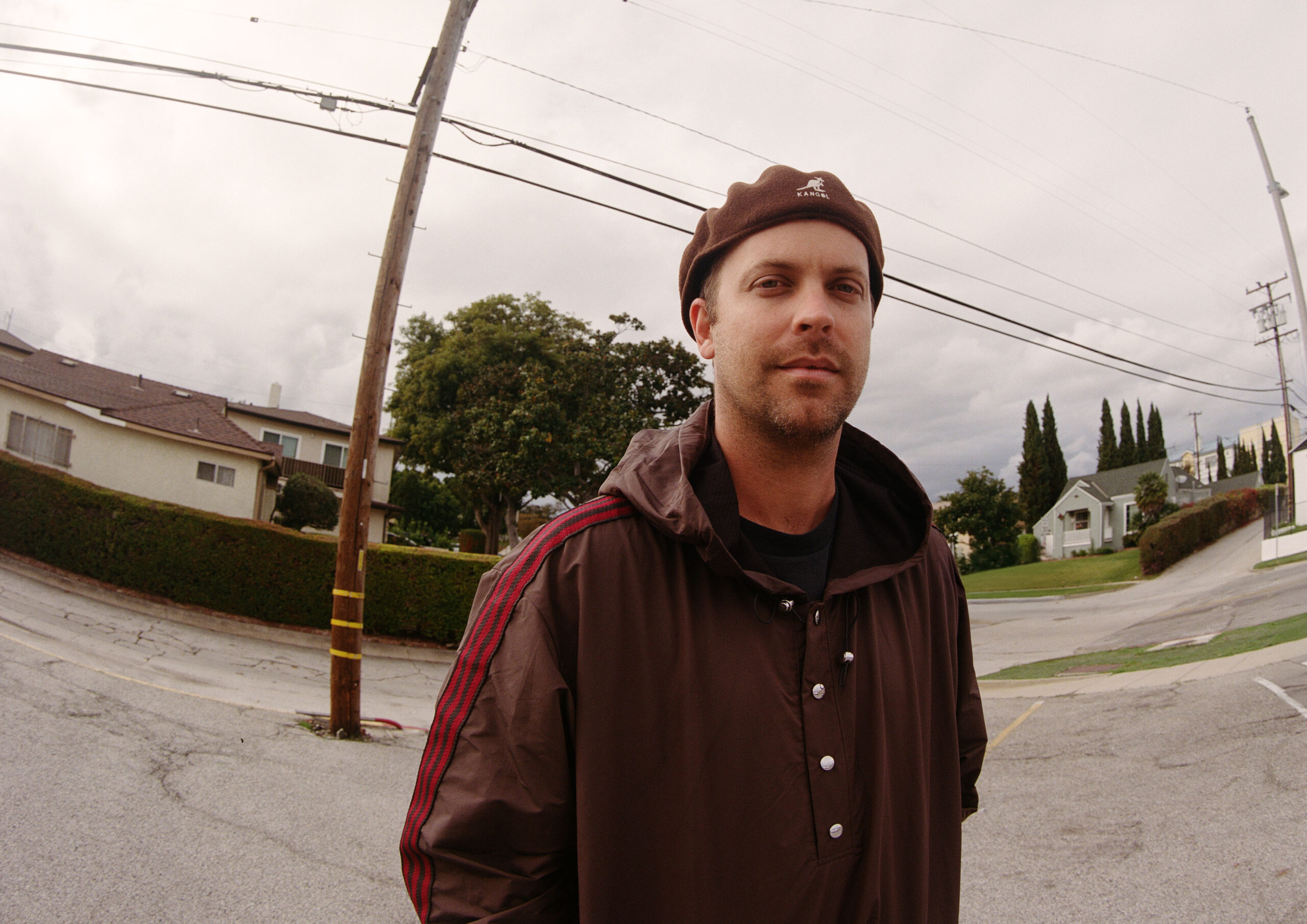
As the adage goes, home is where the heart is. For Australian multi-instrumentalist, producer, mixer, singer and songwriter Jay Watson, that couldn’t be truer. His seventh studio record is an ode not just to his country but the worlds within worlds, that is, Western Australia. A landmass that is larger than most European nations, his beloved Australian state is where Watson’s heart lies and the bedrock of his musical foundations. Known as a touring member of the psychedelic band Tame Impala and as a co-founder of the psychedelic rock band Pond, Watson also records solo material under the name GUM. A tireless contributor and creator, his latest album celebrates a particular kind of comfort and stability. When not travelling and performing, the allure of home and its botanical uniqueness draws him to a place of certainty and stability.
Hi Jay and thanks for taking the time out to speak with us at Musicology. The autocracy of solo work versus the collective democracy of band albums is fairly obvious, yet on this particular album, it feels as though you have boldly grasped a sound and direction that feels the most comfortable fit. Is this a record that says more than just the nine tracks that bear its name, and more about you and how much of yourself you have previously exposed?
I think it’s my most honest and earnest record for sure. I mixed the vocals up, I spent more time on the lyrics and made sure I stood behind them. I think it was just made with a confidence that I didn’t have earlier on.
Given your notable work with Pond and Tame Impala, what areas of exploration are you able to undertake that are not possible with your other outfits?
I can go deep into my own specific emotions and psyche without it feeling as self-centred as if I brought it into a band. I can also have a go at corners of music that don’t resonate with my other bandmates as much, and explore new ground.
Being so vulnerable on this album is reflected in your lyricism, but also with an unmistakable maturation that is befitting of all musicians using their art to express themselves, but when deep diving into highly personal subject matter, are there lines you won’t cross in order to produce a track?
I’m not sure that I’ve ever spoken specifically enough about something a person has done to feel any guilt writing about people, it’s more about using people and places and situations as concepts for songs, rather than talking about them specifically in a song.
There is a lot of Australiana in your work, and putting aside the album title for a minute, what unique qualities do you feel filter through your music that originate from an Aussie psyche?
The older I get, the more I’m genuinely appreciative to live here and have grown up here, and get to experience the landscape on a daily basis. Even simple things that are everywhere, like Gum Trees and Norfolk Pines, are really evocative and inspiring to me. I think I relate to that Australian kind of AC/DC thing of just getting on with it, too, just start the next project as soon as the previous one is done and keep it moving. Bon Scott is buried less than a kilometre from my house!
Between worlds, or at least spending time in alternate hemispheres, does one location give you a greater sense of the other and its influence on your creativity?
I’m always excited to leave Australia and head overseas on tour, it’s a great refresher and way to stimulate my songwriting and challenge my outlook on the world, but after four or five weeks, I’m usually pretty excited to get home. It’s really the perfect environment for creating stuff.
What aspects have you retained in the making of Blue Gum Way that have shared heritage with your previous albums, and in what ways did you want to push the sonic boundaries for this album?
I think that it sort of started with my favourite stuff from the previous album ‘Saturnia’, and pushing those sort of looser, jazzier and cinematic elements further on this one, with maybe more focus on making a coherent album.
Were there any odd external factors that contributed to the direction of the record, which subtly or overtly altered its trajectory?
I sort of embraced my music theory stuff that I learned between twelve and eighteen, and deliberately tried to forget early on. I think getting into more jazz and classical music really informed the new album, and I leaned on some of those things I learned in school and university more than I ever have.
How is your music evolving in line with your personal changes, mirroring your time and the place of this album?
I think this one really reflects where I’m at in my life, with two kids, but with more drive than ever to create things. I also think it’s my most West Australian feeling album.
When working on a very individualistic project, it is still impossible not to work with others in order to make the album, so how was it that you expressed to your collaborators the unique sonics that you needed from them to reflect your messages?
I’ve actually made albums in the past without anyone at all helping me, and it’s just a lonely and to be honest, long, boring journey doing that. You want people to share in the enthusiasm of what you’re making with you, and give you criticism, suggestions and an alternate perspective. All the people I ask to play on it, or mix it, or do the artwork these days are amazing at what they do and are pretty experienced, so I don’t really need to explain what I’m after too much; they understand the references and the nuances.
Lastly, what does music give you that nothing else does?
Music gives me a particular type of excitement that no other medium does. When you discover something that moves you that you’ve never heard of before, it’s the best feeling. My aim is to try and give that to other people too.